Daily Yoga for Total Body Flexibility: Easy Step-by-Step Guide
Discover the benefits of yoga for total body flexibility. Learn how yoga improves mobility, posture, and muscle balance with simple step-by-step practices.
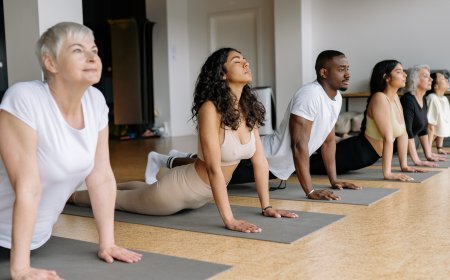
The benefits of yoga for total body flexibility go far beyond touching your toes or mastering advanced poses. In today’s fast-paced lifestyle, prolonged sitting, limited movement, and stress can make muscles tight and joints stiff. Yoga offers a gentle yet powerful way to restore mobility, improve posture, and create balance throughout the body. Unlike isolated stretching routines, yoga focuses on coordinated movement, breathing, and mindful awareness. This combination helps improve flexibility safely while also supporting strength and stability. Whether you're a beginner or experienced practitioner, incorporating yoga into your routine can gradually unlock greater freedom of movement and overall body comfort.
Benefits of Yoga for Total Body Flexibility
1. Improves Joint Mobility and Range of Motion
Yoga gently moves the body through different planes of motion, which helps maintain healthy joints and improve mobility. Regular practice encourages synovial fluid circulation, reducing stiffness and discomfort. Dynamic transitions between poses gradually expand your range of motion without forcing the body. Over time, movements like forward folds, gentle twists, and hip openers help release tightness accumulated from daily habits. According to research discussed in this external resource from Vikasa, full-body yoga practice supports balanced flexibility across muscle groups, reducing uneven tension patterns that often lead to discomfort. You can explore more about this in this article: https://vikasa.com/2024/11/02/why-yoga-is-the-best-practice-for-full-body-flexibility/.
Many people experience tight hamstrings, stiff shoulders, and restricted hips due to sedentary lifestyles. Yoga addresses these areas holistically rather than isolating one muscle at a time. Poses such as downward dog, low lunges, and gentle backbends help lengthen muscles while maintaining engagement. This balanced approach prevents overstretching and supports safe flexibility development. Slow, mindful breathing also signals the nervous system to relax, allowing muscles to release tension naturally. Over time, this leads to a noticeable improvement in ease of movement and reduced physical strain.
3. Enhances Posture and Spinal Flexibility
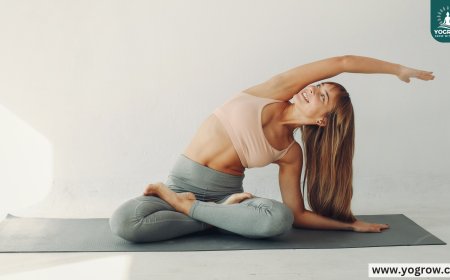
Total body flexibility includes spinal mobility, which plays a major role in posture and comfort. Yoga incorporates forward folds, backbends, and twists that gently mobilize the spine in multiple directions. This helps counteract rounded shoulders, tight lower back, and neck stiffness. Improved spinal flexibility also supports better alignment during everyday activities like sitting, walking, and lifting. When posture improves, the body distributes weight more efficiently, reducing strain on joints and muscles.
4. Builds Balanced Flexibility with Strength
One of the unique benefits of yoga is that it builds flexibility alongside strength. This combination protects joints and prevents injury. Holding poses such as warrior variations, plank, and chair pose activates muscles while lengthening them. This improves functional flexibility — the ability to move safely in real-life situations. Instead of passive stretching, yoga encourages controlled movement and stability. Over time, this creates balanced flexibility that supports both mobility and endurance.
5. Supports Relaxation and Nervous System Flexibility
Flexibility is not just physical — the nervous system also plays a role. When the body is stressed, muscles naturally tighten. Yoga promotes relaxation through slow breathing and mindful movement, allowing the nervous system to shift into a calm state. This encourages muscles to release more effectively. Practicing slow, intentional yoga can significantly improve flexibility outcomes. Scientific insights discussed in Yoga Journal explain how consistent stretching combined with relaxation helps improve long-term flexibility safely: https://www.yogajournal.com/practice/beginners/what-science-can-teach-us-about-flexibility/.
Practical Steps to Improve Total Body Flexibility with Yoga
Step 1: Start with Gentle Warm-Up Movements
Begin with simple movements like neck rolls, shoulder rotations, and cat-cow stretches. These prepare the muscles and joints for deeper flexibility work. A gentle warm-up also reduces the risk of strain and helps the body move more freely.
Step 2: Focus on Major Tight Areas
Pay attention to commonly tight regions such as hips, hamstrings, shoulders, and lower back. Include poses like:
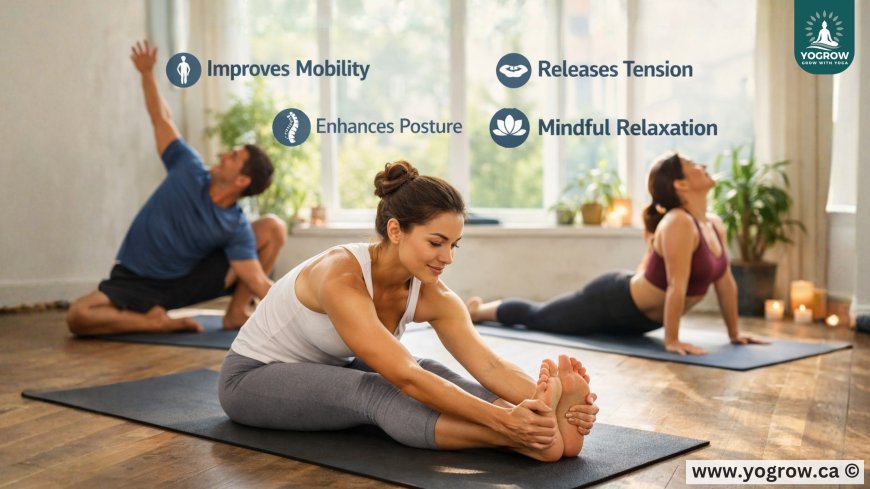
Forward fold for hamstrings
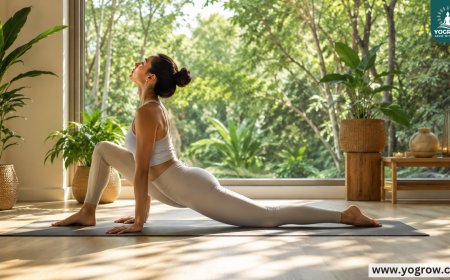
Low lunge for hip flexors
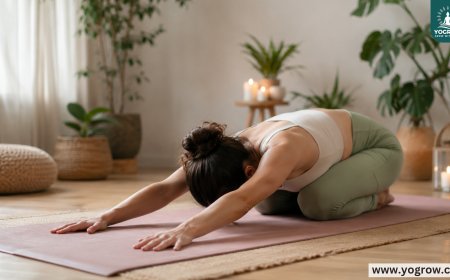
Child’s pose for lower back
Thread-the-needle for shoulders
Hold each pose comfortably while breathing slowly.
Step 3: Use Slow, Controlled Breathing
Breathing deeply helps relax muscles and allows deeper stretching. Try inhaling to lengthen the spine and exhaling to gently deepen the stretch. Avoid forcing the body into positions.
Step 4: Practice Dynamic + Static Stretching
Combine gentle flowing sequences with longer holds. Flowing movements improve mobility, while longer holds help lengthen muscles. This balanced approach builds sustainable flexibility.
Step 5: Stay Consistent with Short Sessions
Consistency matters more than intensity. Practicing 10–15 minutes daily is more effective than long occasional sessions. Gradual progress prevents injury and improves long-term flexibility.
Step 6: Finish with Relaxation
End your session with a short relaxation pose. This helps the nervous system integrate flexibility gains and allows muscles to release fully.
The benefits of yoga for total body flexibility extend beyond improved movement. Regular practice helps release muscle tension, enhance posture, improve joint mobility, and support relaxation. By combining mindful breathing with gentle stretches, yoga creates balanced flexibility that supports everyday activities and overall well-being. Starting with simple steps and practicing consistently can lead to noticeable improvements over time.
Ready to improve your flexibility? Start with a short daily yoga practice, explore more Yogrow blogs, and share your experience in the comments. You can also subscribe for more guided yoga tips and wellness insights designed to support your movement and mindfulness journey.





 Like
0
Like
0
 Dislike
0
Dislike
0
 Love
0
Love
0
 Funny
0
Funny
0
 Angry
0
Angry
0
 Sad
0
Sad
0
 Wow
0
Wow
0