
Deep Healing Yoga for PCOS: The Stress-Relief Secret Every Woman Should Know
Discover how deep healing yoga helps reduce PCOS-related stress, balance hormones, and ease symptoms naturally. Learn benefits, poses, and step-by-step tips.

Polycystic Ovary Syndrome (PCOS) affects millions of women worldwide, leading to hormonal imbalance, irregular periods, weight gain, and chronic stress. Deep healing yoga for PCOS-related stress offers a gentle yet powerful way to manage symptoms and support overall well-being. As more women seek holistic and sustainable solutions, yoga has emerged as a highly accessible mind-body practice that promotes balance, reduces anxiety, and improves quality of life.
Benefits of Deep Healing Yoga for PCOS-Related Stress
1. Helps Balance Hormones Naturally
One of the most significant benefits of yoga for PCOS is its ability to support hormonal balance. According to a 2023 Healthline-reviewed study yoga for PCOS benefits. regular yoga practice can help lower testosterone levels—one of the major root causes of PCOS symptoms like acne, hair loss, irregular cycles, and weight gain.
Yoga achieves this balance by:
-
Reducing cortisol levels (stress hormone)
-
Improving insulin sensitivity

-
Enhancing endocrine system function

Lower testosterone levels are associated with improved menstrual regularity, reduced pain, and better ovulation patterns.
If you’re exploring yoga from a fertility or hormonal perspective, here’s a helpful internal guide on how yoga helps women with PCOD conceive naturally.
2. Reduces PCOS-Related Stress, Anxiety & Depression
PCOS is often linked with emotional strain, anxiety, mood swings, and even depression. Yoga’s combination of breathwork, slow movement, and mindfulness significantly reduces physiological stress responses.
Research also shows:
-
Reduced heart rate
-
Decreased chronic inflammation
-
Lower cortisol and adrenaline
-
Improved emotional resilience


This mind-body connection is one of the primary reasons yoga is recommended for PCOS management today.
3. Improves Circulation & Blood Flow to the Pelvic Region
Many PCOS symptoms—including cramps, bloating, discomfort, and reproductive challenges—are associated with poor circulation in the pelvic area.
Gentle yoga poses like:
-
Malasana (Garland Pose)
-
Supta Baddhakonasana (Butterfly Pose)
-
Setu Bandhasana (Bridge Pose)
…help increase blood flow, stimulate the reproductive organs, and release tension around the hips and lower abdomen.
These poses also strengthen the pelvic floor, support digestion, and reduce inflammation, contributing to long-term symptom relief.
4. Accessible for All Fitness Levels
Unlike high-intensity workouts such as running, cycling, or swimming, yoga is low-impact and adaptable for every age and body type.
Benefits of yoga’s accessibility include:
-
Safe for beginners
-
Easy to practice at home
-
Suitable for women with pain or low energy
-
Requires minimal equipment
-
Allows gentle progress at your own pace
For anyone beginning their wellness journey, yoga offers an inviting entry point without the risk of overexertion.
For a deeper dive into beginner-friendly practices, explore our internal blog: 7 Yoga Techniques for Deep Inner Peace & Clarity.
5. Enhances Sleep & Emotional Well-Being
Chronic stress from PCOS often leads to disrupted sleep cycles, fatigue, and irritability. Yoga helps regulate melatonin production and improves overall sleep quality.
Additional benefits include:
-
Better self-esteem
-
Reduced irritability
-
Improved focus
-
Greater emotional stability
This holistic improvement significantly enhances daily life for individuals living with PCOS.
Practical Step-by-Step Guide: Deep Healing Yoga Routine for PCOS
Below is a simple, restorative yoga sequence you can practice daily or 3–4 times per week. These poses are backed by research and endorsed by yogic experts for their PCOS benefits. They’re also supported by high-authority sources such as Art of Living’s guide on yoga for PCOS benefits of yoga for PCOS .
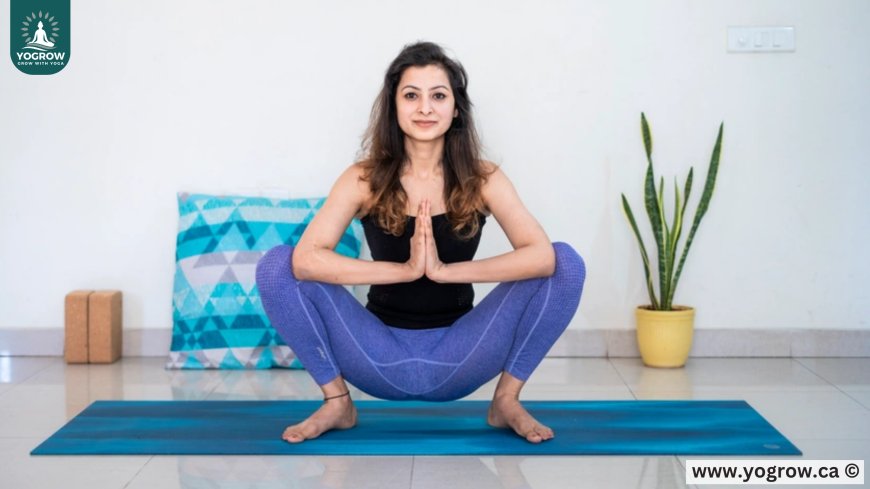
1. Garland Pose (Malasana)
Duration: 5 breaths × 3 rounds
Steps:
-
Stand with feet wider than hip-width.
-
Bend knees into a natural squat.
-
Press palms together at heart center.
-
Open knees using elbows and lengthen spine.
-
Hold and breathe deeply.
Benefits:
Improves pelvic circulation, reduces menstrual pain, strengthens pelvic floor.
2. Bridge Pose (Setu Bandhasana)
Duration: 1–2 minutes × 3 rounds
Steps:
-
Lie on your back, knees bent, feet hip-width apart.
-
Press into your feet and lift your pelvis upward.
-
Roll shoulders back and lift chest.
-
Hold with steady breaths.
Benefits:
Reduces anxiety, improves digestion, balances thyroid function.
3. Cat-Cow Pose (Chakravakasana)
Duration: 10–15 rounds
Steps:
-
Come to tabletop position.
-
Inhale: Drop belly, lift tailbone and chin (Cow).
-
Exhale: Round spine, tuck chin and pelvis (Cat).
-
Continue flowing with breath.
Benefits:
Relieves lower back pain, stimulates ovaries, improves spinal flexibility.
4. Butterfly (Supta Baddhakonasana)
Duration: 3–5 minutes
Steps:
-
Sit with legs extended.
-
Bring soles of feet together and let knees drop.
-
Lean back until lying down fully.
-
Rest arms open, palms facing up.
-
Breathe deeply.
Benefits:
Calms nervous system, improves hip flexibility, reduces pelvic tension.
5. Slow Guided Breathwork (Pranayama)
Duration: 5 minutes
Try:
-
Box Breathing (4-4-4-4)
-
Alternate Nostril Breathing
Benefits:
Regulates cortisol, enhances emotional balance, improves hormonal health.
6. Mindfulness Meditation
Duration: 5 minutes
Sit comfortably, close your eyes, and observe your breath.
This simple practice lowers stress hormones and improves mental clarity.
7. Lifestyle Tips to Boost PCOS Results
Pair your yoga routine with:
-
A balanced, anti-inflammatory diet
-
7–8 hours of uninterrupted sleep
-
150 minutes of weekly moderate exercise (CDC recommendation)
-
Hydration
-
Reduced sugar and processed foods
Combining yoga with lifestyle adjustments amplifies results significantly.
Deep healing yoga is a powerful, holistic approach to managing PCOS-related stress, balancing hormones, and regaining control of your physical and emotional well-being. With consistent practice, it supports a healthier lifestyle, reduces anxiety, improves sleep, and enhances reproductive function.
To continue your journey toward mindfulness, explore our guide on finding instant calm with simple yoga techniques for deeper relaxation and mental clarity.
If you found this guide helpful, subscribe to our newsletter, share with a friend, or explore more PCOS-focused yoga resources on Yogrow.ca to transform your health naturally.
What's Your Reaction?
 Like
0
Like
0
 Dislike
0
Dislike
0
 Love
0
Love
0
 Funny
0
Funny
0
 Angry
0
Angry
0
 Sad
0
Sad
0
 Wow
0
Wow
0